Saturday, November 30, 2019

Get Pokemon Sword and Mario Kart 8 for just £20 with this Nintendo Switch Bundle

Black Friday 2019 is almost upon us, which means the deals are only getting sweeter and sweeter – and this Nintendo Switch deal with Pokemon Sword and Mario Kart 8 Deluxe is no exception. 

Very.co.uk is offering the Nintendo Switch Neon Console with Mario Kart 8 Deluxe and Pokemon Sword (sorry Shield fans) for a barnstorming £299, equalling a saving of roughly £60. In the Pokemon world, they'd call this a pretty good catch. 

This bundle includes the new and improved version of Nintendo's hybrid console – sporting a vastly improved battery life which lasts between 6 – 8 hours depending on what you're playing. It's a huge improvement compared to the launch model, especially if you're a lover of playing in handheld mode. 

I've been perusing an endless range of Nintendo Switch bundles in the run-up to Black Friday and this is definitely the best I've seen so far, offering a duo of games which you can play perfectly both alone and with friends. Let's delve into exactly why these titles are so good. 

Mario Kart 8 Deluxe is a port of the Wii U iteration complete with a range of new bells and whistles. New characters such as King Boo and the Inklings improve an already fantastic roster, with all previously released downloadable content available as part of the package. 

'After Breath of the Wild, Mario Kart 8 Deluxe is the next Nintendo Switch must-buy. It's the best the series has ever been, offering one definitive package. With the glorious return of Battle Mode, improved visuals and more content than ever before coupled with more ways to play it than ever thanks to the Nintendo Switch, I don't think fans could ask for much more,' reads our 5/5 review.

Pokemon Sword is an equally fantastic experience, cementing itself as a worthwhile new entry in Game Freak's beloved RPG franchise. Taking players to the UK-inspired region of Galar, you'll encounter a variety of new Pokemon, trainers and locations on your journey to becoming a Master.

Black Friday is only just getting started, so be sure to stay updated by checking out our list of Best Nintendo Switch Deals which we'll be updating frequently over the coming days with all the latest and greatest bargains. Now, if you'll excuse us, we need to catch 'em all.

If you want to be up to date with the latest deals over Black Friday, follow us @TrustedDealsUK

We may earn a commission if you click a deal and buy an item. That's why we want to make sure you're well-informed and happy with your purchase, so that you'll continue to rely on us for your buying advice needs.

Games Writer

Jade is the dedicated games writer at Trusted Reviews. She handles all things gaming whether it be news, reviews, events or silly features. Seen at outlets such as MTV UK, Kotaku and Trusted Reviews (…

Unlike other sites, we thoroughly review everything we recommend, using industry standard tests to evaluate products. We'll always tell you what we find. We may get a commission if you buy via our price links. Tell us what you think – email the Editor

Friday, November 29, 2019

How Pokémon fever has gripped the world, connecting people of all ages

[unable to retrieve full-text content]I remember playing out in the back garden when I was six years old, armed with nothing more than a plastic bucket and spade. I had recruited several fellow aspiring Pokémon masters in the vicinity, ...

Thursday, November 28, 2019

Pokémon Sword and Shield show the turbulent road to Internet and esports stardom

Back in the real world, the younger generation wants to be famous on YouTube when they grow up instead of astronauts. More and more, kids are looking up to streamers and esports heroes, or dreaming of going pro themselves. Sword and Shield are windows into that world: You’re an athlete at the top of your game, but you’re also saddled with all the attendant stress and uncertainty.

Game Freak itself has stated that examining sports culture was the team’s intent.

“In the UK, which serves as the inspiration for [Sword and Shield’s setting] the Galar region, sports like soccer and rugby are very popular and players compete to become the very best and lead their team to winning championships,” said game director Shigeru Ohmori in an interview on Pokémon’s official website. “This kind of sports journey is also a very popular genre in Japanese manga and anime, and we’re taking a similar approach with the story for these games.”

Sword and Shield have similarities to traditional sports, but it expands to esports, too, especially because of the young age group that defines Pokémon trainers: It’s a world that puts child athletes on a pedestal. And along with that spotlight can come pressure, stress and toxicity.

For real-life Pokémon competitors Aaron Zheng and Wolfe Glick, the game reflects their own esports journeys in several ways. Zheng, who began competing at 10 years old, and Glick who started as a freshman in high school, have both found huge success in Pokémon tournaments. Glick won the Pokémon World Championships in 2016, and Zheng has won numerous regional and national championships. Having both played Sword, they connected to its themes of esports culture.

“I think this game is kind of unique because in the previous games, they always have like the Elite Four [the four rivals you normally have to beat], which has been a staple in the games," Zheng said. "But in this game, it was a little bit different where it’s a tournament. And it reminded me a lot of the [Pokémon] World Championships, where they call it the semifinals, and then the finals, and then you go up against the champion. And that was really cool.”

For Glick, it wasn’t just themes and narrative that paralleled his real-life experience of playing Pokémon competitively. It was also meaningful to him that Game Freak put more emphasis on mechanics and items that are significant for competitive play. Combining all these elements, he said, feels like a perfect unison.

“Something I thought was really, really, really cool about these games is that for a really long time, Pokémon never really acknowledged the competitive scene [in-game]," Glick said. "Pokémon would never make any allusions to that. It just felt like it really wasn’t a priority; that Pokémon was for the main game and the competitive scene was an afterthought. But this was the first game for me that felt very different in a lot of ways.”

In Sword and Shield, the player is made to feel like a star not just through your accomplishments, but in how the world treats you. With each battle you win, your fame grows astronomically. You stay in swanky hotels, go to extravagant dinners with the chairman of the league and get interviewed about your stardom from reporters who aim TV cameras at your face. Your fans, many of them children themselves, debate and criticize your strategies as you walk past, or tell you that they want to be just like you one day. This all begins, however, to feel like an insular world: Everywhere you turn, characters are talking about you, the championship and who they want to see triumph. That insular feeling can feel suffocating.

You’re a kid. Your character doesn’t have much of a voice â€" literally â€" outside of the rare moments where you can choose a line of dialogue. This adds to the feeling that you don’t have a choice or a say in whether you actually want to be a Pokémon master at all. It doesn’t matter. It’s expected of you.

And your pursuit can leave you feeling isolated. Your best friend Hop, for example, consistently puts your friendship second and the championship first. As the story progresses, Hop’s wavering self-esteem turns into more of a nervous breakdown. He is, after all, in the same predicament, and his brother is a Pokémon champion. It’s in his blood. If he isn’t the very best trainer, then what is he? Who is he?

Mental health problems have become prevalent in esports. In 2018, Justin “Plup” McGrath had a panic attack in front of millions. He came in third place in a Super Smash Bros. Melee tournament at the Evolution Championship Series, the world’s biggest fighting game tournament. Afterward, McGrath took to Twitter to explain that he had experienced his first-ever panic attack and candidly said that his anxiety had him worried about future tournament appearances.

Top esports players are no strangers to long hours beyond a standard 9-5 workweek. Given the high-stakes pressure to perform, many burn out in their 20s.

Zheng is working on his undergraduate degree at Columbia University, and Glick is a full-time consultant, so they both compete in Pokémon on a part-time basis and as a hobby. But even without the same intensity that pro players in esports leagues experience, Zheng and Glick say mental health and balance are a necessity. And it’s not always easy, especially when they both have large followings (Zheng has 74,000 subscribers on YouTube, and Glick has 69,000).

“I think Wolfe and I have been playing for a very long time, and we’ve absolutely felt either burnt out or pressure, because I think as two of the more public figures in the community, you know, whenever you do well, it’s celebrated by a lot of people,” Zheng said. “And the more in the public eye you are, the more often you’re criticized, the more people talk about your performances. That can be kind of rough.”

Because of burnout, Zheng transitioned out of competing in recent years and into casting for the Pokémon Company International.

“I’d gone to a bunch of international events and I really didn’t do very well,” he said. “And that kind of led me to reevaluate everything. I asked myself why I was competing, and what my priorities were.”

Sword and Shield don’t exactly delve into mental health in an in-depth manner, but it’s subtly touched upon. Halfway through the game, Hop has a breakdown and feels inadequate because his skills aren’t where he wants them to be. His character arc never fully resolves these issues, which is a shame, but it’s fascinating to see a series that’s generally been apolitical touch upon the subject at all.

“It’s crazy, the mental pressure you have to deal with, not only when you’re playing, but from all the fans and all the criticism that you get as well," Zheng said. "So it absolutely exists in our scene as well, even though it’s a little bit smaller. I think just the pressure of wanting to do well yourself is already enough.”

Being in the spotlight can be polarizing and add complications, especially when a fan base resorts to harmful behavior. Sword and Shield’s story has a version of a toxic fan base called Team Yell. Team Yell’s attempts to stop you are childish and, at worst, frustrating, but it has a similar anatomy of an Internet mob. Its members see their favorite trainer, Marnie, as an untouchable luminary. Their admiration twists into overzealous obsession: From their point of view, she’s the justification for their wrongdoing, and she herself can do no wrong.

Internet toxicity can have serious ramifications. When Toronto-based culture writer Wanna Thompson criticized Nicki Minaj’s music on Twitter last year, for example, she was harassed by an army of superfans who insulted, degraded and threatened her on various platforms. Of course, we don’t see anything nearly as drastic in Sword and Shield. It’s a Pokémon game, after all, but it has fascinating themes relating to the topic.

Glick has faced similar harassment depending on his performance in competitions.

“Our community can be really critical, because Pokémon is a game where someone can win and maybe it’s not as always clear like how high their skill is,” Glick said. “There’s a lot of just general bitterness within the community. There’s a lot of mockery and a lot of trying to tear other people down. So that in particular is taking a toll on me recently because I’ve been the subject of some of that."

Sword and Shield’s themes of sports culture and Internet toxicity bring a welcome change of pace to the story and overall feel of the game, and while they’re not deep enough to truly be a statement, the fact that they exist sparks excitement for the series’s future.

“I love the game,” Glick said. “I think this is the most fun I’ve had playing through a Pokémon game just casually in a long time. It might be my favorite one ever, honestly."

Nearing the end of my play-through of Shield, I entered the final gym and thought about the culmination of these themes: Team Yell’s toxicity and what it means for Marnie, Hop’s breakdown and what his future would hold, and the pressure facing my own character as a child athlete. I was going to make it. I was going to be the very best. But I couldn’t overlook all my character had endured to reach the top. As Glick and Zheng know, the costs of the climb are very real.

Mewtwo Comes to Pokemon Masters in Game’s First Legendary Event

To the presumed delight of those still playing Pokemon Masters, which I had to quit because the grind was simply too much to take, the sync pair of Mewtwo and Giovanni is coming in the game's first Legendary Pokemon event.

Not only will you be able to go up against Mewtwo, but you'll have the ability to add the pair to your own team.

Additionally announced by the team behind the game in a recent video, other new sync pairs are coming to the game, a few special holiday-themed outfits are planned for December, and details for what's to arrive in early 2020 are also discussed.

If you don't want to watch the entire video, which wouldn't shock me unless you really love this game, here's the overview you need to know.

  • Mewtwo & Giovanni come to Pasio: In the game's first-ever Legendary Pokémon event, players will be able to battle against the formidable sync pair of Mewtwo & Giovanni. More importantly, they'll even be able to add this duo to their teams.
  • New sync pairs coming to the game: sync pairs like Grimsley & Liepard, Lance & Dragonite, Cynthia & Garchomp will all be coming to the game in the future. Festive versions of Rosa & Delibird and Siebold & Octillery in their holiday outfits will also be available in mid-December.
  • Game updates coming in early 2020: new features that allow players to train sync pairs in a more personal way, along with a new single-player mode that focuses on different types and roles of sync pairs, will be coming in early 2020.
  • Good luck with the Mewtwo battle.

    Google Play Link

    Wednesday, November 27, 2019

    I accidentally used my Master Ball on Bunnelby, and now it’s my best friend

    The Master Ball has been one of the most coveted items in Pokémon since the first game. It's the Poké Ball that never fails to catch wild Pokémon, and typically, you only get one. In Pokémon Sword and Shield, it's Professor Magnolia who gives you a Master Ball after you've become the new, reigning champion of the Galar region. She'll show up at your home when you're visiting your mum and hand over the pink and purple Master Ball.

    It's a tool to catch only the most precious Pokémon, like one of Sword and Shield's Legendary Pokémon. Or even a Dragapult, if I ran into one. Or maybe a Shiny Pokémon. The Master Ball is meant for a Pokémon that's both rare or hard to catch — a Pokémon I may never encounter again.

    And so I stashed it away and headed back into Sword and Shield's Wild Area to continue filling out my living Pokédex, a collection of each and every Pokémon in the game. The first Pokémon I came across was a Bunnelby, a normal-type Pokémon that's not quite a normal bunny, but might as well be. I don't want to call Bunnelby a garbage Pokémon, but... it's a garbage Pokémon — and oops! Now it's locked within my Master Ball. Yes, I accidentally used my Master Ball to catch a Bunnelby.

    Bunnelby in a Master Ball Ha ha... Game Freak, The Pokémon Company/Nintendo via Polygon

    Here's how it happened, and how you can learn from my mistakes:

    I whittled Bunnelby's health down to almost nothing and threw a regular Poké Ball at it. It broke free. In Sword and Shield, you can easily scroll through your Poké Balls without opening you bag by hitting X. From there, you can choose from your available Poké Balls quickly. It happened so fast. I was scrolling through Poké Balls and instinctively hit A over the Master Ball. The second that button push registered, I knew I had made a mistake. My Master Ball was gone. Now I am the mother to a dumb, grey rabbit whose ears are also hands.

    My first instinct was to find The Ball Guy, a Poké Ball enthusiast who hands out Poké Balls at Pokémon League matches, and ask him what to do. Unfortunately, he didn't answer with anything particularly useful — something like, "I'm the Ball Guy!"

    I ran back to my home in Postwich in search of Professor Magnolia. I checked my house to see if she was still there. She was not. Instead, I got wrecked by my mom: "The Master Ball's guaranteed to catch any Pokémon in one try, right?" she asked. "I bet you'll run into a Pokémon that'll deserve such an amazing Poké Ball one of these days!"

    My Pokemon character talking to her mom Mom... Game Freak, The Pokémon Company/Nintendo via Polygon
    I messaged my co-worker Julia Lee and she offered one perspective: "I'm sorry for laughing, this is horrible." And then, another, which I've repeated to myself each night in hopes I will one day believe it. "This is a very special Bunnelby now, a reminder of hubris."

    For most of Sword and Shield's post-game story, I stuffed Bunnelby in a box in hopes I'd forget about it. The pain of my mother's comments just stung way too much. I kept it there until I finished the rest of the story and caught the Legendary Pokémon I had originally intended to use the Master Ball on — Zamazenta, a fighting- and steel-type puppy dog who is perfect in every way — with an Ultra Ball.

    I've since retrieved Bunnelby from its punishment box. After all, it's not its fault I'm a big dummy. Or that there are tons of other Pokémon better than it. My Bunnelby is a reminder of how far I've come (I've got a Master Ball!) and how far I need to go (I used it on a Bunnelby). I have since rebuilt my Pokémon team around Bunnelby, to make up for his clear and obvious weaknesses. I have stopped trying to convince my friends that Bunnelby was a side effect of Joy-Con drift.

    I'm trying to convince myself that this was fate.

    *Sobs*

    Legendary is what you make of it.

    Tuesday, November 26, 2019

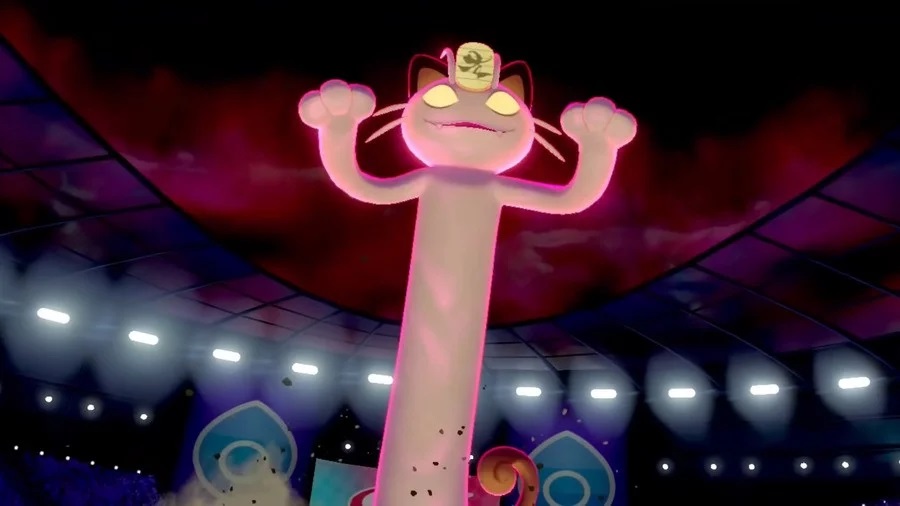
    Pokémon Sword & Shield: How To Earn 99,999 Cash Per Battle | Meowth Money Farming Guide

    Image Source: [1]

    With the right item, Gigantamax Meowth can turn into a money-spewing fountain in Pokémon Sword & Shield. Money is incredibly valuable in the late-game for one simple reason — you can use cash to buy vitamins that increase stats for your favorite Pokémon. That's important if you want to master Max Raids in the end-game, and having an endless supply of quick money just makes everything easier in the long-run.

    Using Meowth, it's possible to earn 99,999 cash from a single battle. Even if you haven't reached the end-game yet, Meowth can earn you huge amounts of cash per fight by combining two multipliers — Meowth's Gold Rush move and an Amulet Coin. You won't get the max amount of cash per battle, but you can still farm for easy cash at any point in the game. Below, I'll explain exactly how this works, where to find your very own Meowth, and where to get the Amulet Coin.

    More Pokémon Sword & Shield guides:

    How To Evolve All The New Galar Region Pokémon | Evolution Guide | What's Exclusive To Each Version? | How To Catch Shiny Pokémon | Pick This Starter Pokémon For An Early Advantage | How To Easily Evolve Farfetch'd Into Sirfetch'd | Brilliant Aura System | How To Catch Improved Pokemon | Combo & Ultimate Moves | Move Tutor Locations | How To Catch Pokemon Easier | False Swipe & Hypnosis Guide | How To Level Up Fast | Exp. Candy Farming Tips

    How To Farm 99,999 Money Per Battle | Meowth Guide

    Using Gigantamax Meowth, it's possible to multiply your cash rewards from completing battles. Add the Amulet Coin, and you're doubling your rewards again! The process is simple, but first let's talk about how to get the Amulet Coin, and how to get a Meowth.

  • How To Get An Amulet Coin: Found behind the sign to Galar Mine #2 in the Motostoke Outskirts area.
  • How To Get Gigantamax Meowth: Mystery Gift for early adopters — or you can trade for standard (Gigantamax) Meowth in Turffield. Talk to an NPC trainer in the Gym to trade.
  • Gigantamax Meowth can appear as a Max Raid opponent in the following Wilds areas: Dusty Bowl, Giant's Seat, Stony Wilderness
  • This trick requires a Gigantamax Meowth, so it only works in Dynamax Battles. Equip the Amulet Coin Held Item on Meowth, then enter a Dynamax Battle – you can farm the Champion Cup and re-battle trainers after you've finished the story.

    To earn 99,999 — the max amount of cash possible — you need to enter Meowth's Gigantamax Form and use his special G-Max Gold Rush move three times. Each time you use G-Max Gold Rush, you multiply the cash reward amount for the battle by x100. Use it three times will multiply your reward by x300. Carrying the Amulet Coin doubles your rewards, so you're getting x600 cash rewards per battle.

    You'll need to be high level, and you'll need to be able to win even if you waste your three turns as a Dynamax Form. To get the maximum amount of cash per battle, you'll need to reach Level 84 with Gigantamax Meowth. Save up Rare Candy or use your EXP Candy to rapidly level up Meowth, and you'll be good to go.

    Monday, November 25, 2019

    Pocket Monsters Revealed One Of Pokémon's Most Important Origin Stories

    For more than two decades now, we’ve been watching eternal 10-year-old Ash Ketchum make his way through the world of the Pokémon anime series with an assortment of human and Pokémon friends on his quest to become a Pokémon Master. Though Ash has journeyed to multiple regions over the years, both the series and the larger Pokémon franchise have never missed an opportunity to revisit the character’s humble origins in Pallet Town where he first met Pikachu, the Pokémon who’d soon become his closest companion.

    Pocket Monsters, the simply named latest entry in the anime franchise, once again looks back to Ash’s roots as part of its larger story that’s going to follow the trainer as makes his way into the new Galar region from Pokémon Sword and Shield, but the series premiere kicked things off this week with a surprisingly different focus.

    While Ash has always been the heroic star of the Pokémon anime, Pikachu has always been the star of the Pokémon brand as a whole, even as Nintendo’s gradually elevated the profiles of other Pokémon like Eevee.

    Rather than simply retelling the story of how Ash and Pikachu first became partners, Pocket Monsters instead looks even further back into the past somewhere in the Kanto forests, where all manner of Pokémon native to the region lived in relative harmony. Flocks of Butterfree soar through skies above trees that are full of chattering Mankey swinging from branch to branch.

    The episode’s opening moments are chock full of nothing but Generation I Pokémon, making the entire setting feel like something snatched right out of Pokémon Red, Blue and Yellow, but there’s one small monster that stands out because originally, it didn’t show up until Generation II.

    There’s a Pichuâ€"a baby Pokémonâ€"living among all of the much larger Pokémon, and while the mouse still doesn’t have full control of its electrical abilities, it gets by well enough running around, being cute, and marvelling at its surroundings.

    Unlike all of the other Pokémon in the forest, the Pichu appears to be the only of its kind, but it doesn’t seem to particularly mind and the episode follows as it goes for a stroll that quickly takes a turn for the dangerous when it encounters a pair of Koffing that accidentally cause the Pichu to fall off a cliff.

    Pichu takes a number of rough hits as it falls, but before it can actually hit the ground, it’s caught by a very surprised mother Kangaskhan, the parent Pokémon. Pichu becomes friendly with Kangaskhan’s child, which delights the Kangaskhan, and the older Pokémon quickly deduces that Pichu’s all alone in the world, and so she decides to plop the baby mouse in her pouch right along with her own offspring.

    The Pokémon anime has a long history of doing Pokémon-centric episodes where few humans appear and the bulk of the dialogue consists of different Pokémon saying their names to one another, meaning that we’re left to interpret what’s going on through their expressions and actions towards one another.

    Because Kangaskhan is a species of Pokémon known for nurturing their young (all Pokémon do it, obviously, but parenting is Kangaskhan’s whole thing), it makes sense that the Kangaskhan would readily take Pichu in as its own. While Pichu wasn’t exactly unhappy before it ended up being adopted by another Pokémon, being with Kangaskhan and her baby makes Pichu feel loved in a way that a Pokémon could never quite verbally express to a human.

    As the episode progresses, you see that, like the other pouch-bound baby, Pichu grows significantly under Kangaskhan’s care, but the strain of carrying two growing Pokémon is something that physically taxes the Kangaskhan in a way that Pichu can’t ignore. To the Kangaskhan, being constantly exhausted is worth it, because she cares about them both deeply.

    Pichu loves them both too, but it understands that by being with them, it’s taking away from the overall amount of energy Kangaskhan could be putting into taking care of its biological child. And so, while the three of them are sleeping together in a cave one evening, Pichu makes the difficult decision to leave, and it tearfully looks back at them from a distance to say goodbye.

    The important thing to understand about what happens next is that while most Pokémon evolve simply because they’ve reached a certain degree of physical maturity (reflected in levels in the video game), others can only transform under a very specific set of circumstances. Pichu, for example, can only evolve once it’s developed a deep and powerful bond with someone it cares about like a Pokémon trainer who’s raised it. Or, in Pichu’s case, the Kangaskhan family who treated it like one of their own.

    After Pichu evolves into Pikachu, the mouse excitedly scurries off to embark on the next leg of its personal journey through the larger world of Pokémon, and while things seem like they’re going to be great for it, Pocket Monster then makes clear just how Pikachu’s story factors into the larger one being told.

    Of course, this Pikachu isn’t just any old Pikachuâ€"it’s the Pikachu, meaning that not long after it met a loving group of friends who helped it become a new, stronger person, some old human had the audacity to force it into a Pokéball and then give it to a child who couldn’t even be bothered to wake up on time to begin his Pokémon adventure.

    From here, the story becomes that familiar old tale of boy-meets-mouse, but the whole of the episode recontextualises some of the established things about Pikachu’s personality that have always been core elements of the series. Obviously, you can understand why Pikachu harbored resentment towards Ash immediately after meeting him and subsequently refuses to enter its Pokéball again.

    More interestingly, though, the episode also introduces the idea that Pikachuâ€"who has always balked at the concept of evolution in the animeâ€"might cherish its current form, both because it likes itself the way it is and because it reminds it of its connection to the Khangaskan in the forest.

    It’s a heartwarming, significant deepening of the world’s most famous Pokémon, and, hopefully, the kind of thoughtful storytelling that’s going to define the rest of Pocket Monsters.